Showing posts with label BHA. Show all posts

Friday, June 15, 2012

Fwd: Dermatologists hate me for saying this...


European Sunscreens are better than those from USA?

Sunscreen contain dangerous chemicals like parabens, BHA, oxybenzone, and hydroquinone.  Why does FDA still allow them on sunscreen?
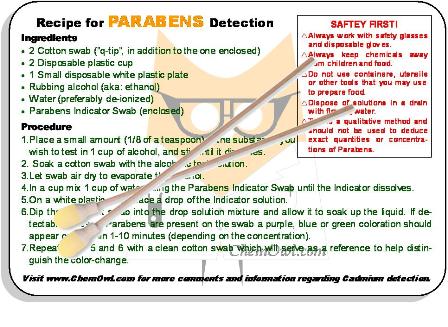


 It is an anti oxidant. BHA


  Hydroquinone for removing dark spots, skin whitening


And then we ask ourselves, why is there an ever increasing incidence of cancer?

From: Discovery Health Publishing <support@xfactorrevolution.com>
Date: Tue, Jun 12, 2012 at 6:14 PM
Subject: Dermatologists HATE Me for Saying This...


Discovery Health Publishing

Dear ,
It's summer, and that means it's time to fire up the grill and enjoy the outdoors with your family and friends.
It also means you'll hear the propaganda machine being cranked up by the dermatologists and sunscreen industry telling you to apply layer upon layer of commercial sunscreens before you leave the house.
But before you slather on your "protection," there's something you need to know.
Your sunscreen could be doing you more harm than good. In fact, your sunscreen could be boosting your chances of getting skin cancer!
Here's what you need to know to protect yourself from the sunscreen rip-off.
Shocker #1: Sunscreens contain dangerous chemicals
Sunscreens are supposed to protect you from harm. But sunscreens are loaded with chemicals that can make you sick. Here's a list of some of the worst offenders:
  • Parabens. These toxins are used as preservatives in many cosmetic products - including sunscreens. But they do a lot more than prevent spoilage. Parabens act like the female hormone, estrogen, in your body. They also undermine the effect of testosterone.1 In other words, parabens disrupt normal hormone activity in your body.
  • BHA. The Food & Drug Administration (FDA) says you should use sun protection if you apply BHA to your skin.2 So why would anyone with a brain put it in a sunscreen product? But it gets worse. The FDA says you should never use BHA on infants or children. Ever.
  • Oxybenzone. Here's a great idea for a sunscreen ingredient. Studies show that exposure to the sun's rays cause oxybenzone to increase production of skin-damaging free radicals!3
  • Hydroquinone. You want cancer with that? Hydroquinone is known to cause cancer in laboratory animals.4 So why do they put it in your sunscreen?
Shocker #2: Better Options Exist... But You're Not Allowed to Have Them
If you want better sunscreen protection, move to Europe.
Europe? Yes... because European sunscreens can offer better protection than those allowed in the US.
In fact, when the non-profit Environmental Working Group (EWG) tested 446 SPF 30+ sunscreens available in the US, they found 284 of them were too weak to meet European standards.5
That's because the US products protect against UVB rays... but not the less obvious UVA rays.
UVB rays cause sunburn. But UVA rays cause damage without burning. And sunscreens in Europe can contain several proven, non-toxic UVA blockers that aren't allowed in the US.
So your skin gets quietly toasted without you ever noticing. In fact, one of the non-toxic ingredients allowed in Europe is more than 5 times more effective than the best ingredient allowed in the US.
But not to worry. AT least your sunscreen protects you from skin cancer, right?
Wrong!
Shocker #3: Your Sunscreen May Be a Ticking Time Bomb of Cancer
The main reason everyone tells you to use sunscreen is to protect your skin from cancer. But there's very little evidence that sunscreens offer any cancer protection at all.
In fact, as you'll see in a moment, the exact opposite may be true!
In Australia - where you can really see the effects of the sun - researchers tested sunscreen on 1,621 people. They found that sunscreen use provided no real protection at all against the most common form of skin cancer.6
And when it comes to melanoma - the nastiest form of skin cancer - a report from the University of British Columbia says sunscreens offer no benefit, either.7
However, an ingredient found in 4 out of 10 sunscreens was found to increase the risk of skin cancer.8 And a European study group saw a rise in nasty melanomas among children who used sunscreens more often.9
And cancer isn't the only problem linked with sunscreen use...
Shocker #4: Sunscreen Use Robs You of Critical Nutrition
Remember when rickets ravaged the civilized world?
If you do, you're a lot older than you look. Because rickets was wiped out generations ago. Or so we thought.
But rickets is making a comeback. And it's thanks - in part - to sunscreen use.
Rickets is a childhood disease caused by too little vitamin D. Without enough vitamin D, bones can't develop, and children wind up with soft, spongy, weak bones.
Long ago, rickets nearly disappeared completely. We added vitamin D to foods like milk, and the problem was solved.
Until parents began slathering sunscreen on their children. Now rickets is making a comeback - especially in sun-starved Britain. Take the case of poor Lisa, for example.
London's Daily Mail reports that Lisa lives in one of Britain's sunniest locations - the Isle of Wight. And her mother's a nurse.
But at age 12, Lisa began experiencing pain and weakness in her legs. Then, after a hip operation, she failed to recover as expected.
It took a while, but her doctors figured it out. Lisa was suffering from a serious vitamin D deficiency. And the major problem was that her mother covered her liberally with sunscreen every time she went out to play.10
But it's not just kids who suffer.
Melt Away 350 Diseases Doing
Nothing More than Touching Your Ear !
If you suffer from chronic health problems ... pain ... addiction to alcohol or drugs ... excess weight ... low sex drive ... or virtually any disease ... this may be the most exciting message you'll ever read.
You may have tried just about everything to heal your health problems, but when nothing helped, you feel there isn't anything else you can do. However, there is...
... a little-known treatment based on
an ancient technique that can quickly help even
long-standing health problems. . . in people of all ages.
The simple solution you'll discover here is not on the radar of most doctors and other practitioners in the healthcare industry. The method is so easy, you'll wonder how it could possibly work.
In a case of ultimate irony, vitamin D may be one of your body's best weapons against cancer. And you may need 4,000 International Units (IU) per day to get any real benefit.11
But the government calls for only 800 IU per day for mature adults - a number determined only on the basis of bone health.
And since the sun is your major source of vitamin D for most of the year, using sunscreen is actually be robing you of vitamin D. And that's the very nutrient you need to prevent cancer - the problem sunscreen is supposed to prevent.
And that's just one of vitamin D's many health benefits.
But that may not be the worst news of all. Because your health's greatest enemy may be the one who's supposed to be protecting you.
Shocker #5: The FDA Is No Help
It's old hat to say the FDA is in the drug industry's pocket. But time after time, you can't come to any other reasonable conclusion.
Today, I listed 4 dangerous chemicals in sunscreen products. The FDA allows them all - in spite of their risks.
And in spite of ample proof they're safe, the FDA prevents the use of non-toxic ingredients that could protect you from UVA rays.
It's almost as if the FDA was simply doing whatever the cosmetics industry wants.
And that's pretty much what you have to conclude when you consider their latest sunscreen move.
Under pressure from two industry groups - the Personal Care Products Council and the Consumer Healthcare Products Association - the FDA just delayed new sunscreen rules.
The FDA called for more honest reporting of sunscreen benefits. And they set a June 2012 deadline. But the industry claims it would be a burden to honestly state the protection offered by their products. They need more time.
So the FDA buckled, and gave the industry another 6 months to comply... and another year for smaller companies.
Forget the consumer, who's looking out for their health. What's your well being compared to corporate profits?
Protect Yourself from the Sun WITHOUT the Toxic Goop
Well, you can fool them all. Look for sunscreens made with zinc or titanium oxide. These ingredients provide a physical block to the sun's rays... and do it without endangering your health.
Even better, zinc and titanium don't have to be applied ahead of time. So you can get the sun you need to make enough vitamin D... and then apply your natural sunscreen for instant protection.
Most light-skinned people only need about 15 - 20 minutes of summer sun a day to make enough vitamin D. If your skin is darker, you may need up to an hour or so.
Wishing you strength and vitality,
Jason Kennedy
Jason Kennedy
1 Darbre, P.D. and Harvey, P.W., "Paraben esters: review of recent studies of endocrine toxicity, absorption, esterase and human exposure, and discussion of potential human health risks," Appl Toxicol. Jul 2008; 28(5): 561-578.
2 "Selected Cosmetic Ingredients," Food & Drug Administration.
3 Hanson, K.M., et al, "Sunscreen enhancement of UV-induced reactive oxygen species in the skin," Free Radic Biol Med. Oct 15, 2006; 41(8): 1205-1212.
4 Ly, F., et al, "First cases of squamous cell carcinoma associated with cosmetic use of bleaching compounds," Ann Dermatol Venereol. Feb 2010; 137(2): 128-131.
5 "UVA Protection Too Weak to Stop Subtle Harm," Environmental Working Group. Sep 2010.
6 Green, A., et al, "Daily sunscreen application and betacarotene supplementation in prevention of basal-cell and squamous-cell carcinomas of the skin: a randomised controlled trial," Lancet. Aug 28, 1999; 354(9180): 723-729.
7 Gallagher, R.P., "Sunscreens in melanoma and skin cancer prevention," CMAJ. Aug 2, 2005; 173(3).
8 National Toxicology Program, Technical Reports Peer Review Panel Meeting. National Institute of Environmental Health Sciences, Jan 26, 2011; Pp 6 - 7.
9 Autier, P., et al, "Sunscreen Use..." J Natl Cancer Inst. 1998; 90: 1873-1880.
10 Dolan, A., "Girl, 12, at risk of rickets... because mum smothered her with factor 50," Daily Mail. Jan 19, 2011.
11 Garland, C.F., "Vitamin D Supplement Doses and Serum 25-Hydroxyvitamin D in the Range Associated with Cancer Prevention," Anticancer Research. 2011; 31(2).

© Copyright 2012 Discovery Health Publishing, Inc. All Rights Reserved.
Disclaimer: The entire contents of this email are based upon research conducted by the author, unless otherwise noted. The publisher and the author present this information for educational purposes only. The information and material provided on this site are for educational purposes only and any recommendations are not intended to replace the advice of your physician. You are encouraged to seek advice from a competent medical professional regarding the applicability of any recommendations with regard to your symptoms or condition. It is important that you do not reduce, change or discontinue any medication or treatment without consulting your physician first.
The information and recommendations provided on this website have not been evaluated by the Food and Drug Administration and are provided for educational purposes only.
You are getting this e-mail because you subscribed to it on www.discoveryhealthpublishing.com or because you are one of Discovery Health Publishing's prospects or book buyers.

Discovery Health Publishing
11924 W. Forest Hill Blvd. #22-315
Wellington, FL 33414


If you no longer wish to receive our emails, click the link below:
 Unsubscribe

Discovery Health Publishing, Inc.
11924 W. Forest Hill Blvd
#22-315
Wellington, Florida 33414
United States


--
Jorge U. Saguinsin
blogs:   profjorgeentrep
              nuideas
              cheapcures
Slide Presentations at Slideshare -http://www.slideshare.net/profjorge_entrep/

SPREADING THE ENTREPRENEURIAL REVOLUTION


Wednesday, March 21, 2012

Fwd: Nitrites Prevent Meat from turning gray, BHA/BHT from making oil turns rancid

Certain preservatives, all approved by FDA are into many consumer food items.:  nitrites, BHA, BHT and propyl galliate. They are harmful to the body.

l.  Nitrites are found in many preserved meat on our daily meals:  hotdogs and bacon.  Without the nitrites, these meat would be gray.  Would you EAT GRAY MEAT.  However nitrites in  the meat become nitrosamines which are carcinogenic.  It does not happen in vegetables that also contain nitrites but the presence of Vit A and D prevent them from becoming nitrosamines.  That is why eating vegetables is necessary (except those laced with insecticides)

It is nice to note that a local meat processor, as per fmr student at MBA, they have invented a non nitrite food preservative.  Wow.  The US meat processor must learn from the locals.

2.  BHA (butylatedhydroxyanisol) and BHT (butylated hydoxytoulene) are added into potato chips and other packaged products to prevent the oil in these food products from becoming rancid.  BHA, and BHT together with propyl galliate, another preservative, are harmful to health.

---------- Forwarded message ----------
From: Cancer Defeated <custserv@cancerdefeated.com>
Date: Wed, Mar 21, 2012 at 5:09 PM
Subject: Would you ever eat gray meat?


Newsletter #171
Lee Euler, Editor
[Image] Cancer Defeated logo
Web Version | Subscribe | Back Issues | Resource Center | Feedback
About Cancer Defeated!

Would you ever eat GRAY meat?


    Your knee-jerk reaction would probably be to say "NO WAY!" Gray meat likely makes you think of something rotten that would make you sick. Consumers want nice, fresh-looking red meat. But appearances can be deceiving. Keep reading and I'll explain. . .

Continued below. . .


I'll Never Go "Bare" Again

    Did you know your makeup could be causing wrinkles?


    Leading makeup brands that claim to be "natural" use harsh chemicals that can damage your skin and make you look older.


    But there is an alternative. It makes your skin healthier every time you put it on.


    And it works hard to fight the visible signs of aging so you don't have to. It has NO parabens. NO artificial fragrances. NO chemical preservatives. NO pore-clogging waxes.


    Click here to be one of the first to try it.


    Believe it or not—gray is the color that meats like bacon and hot dogs would be if there were no sodium nitrite added to stabilize the red color and add flavor.

    According to the Center for Science in the Public Interest (CSPI)1, when nitrite is added to food it can lead to the formation of cancer-causing chemicals called nitrosamines.

    These compounds are carcinogens that researchers have linked to cancers of the bladder, brain, esophagus, mouth, and stomach. So meat that's been doctored to look healthy isn't really healthy. You might be better off eating gray meat.

    You should know that nitrites also occur naturally in many green vegetables, such as celery, lettuce and spinach. Does that give you an excuse to avoid eating your veggies? Nice try. . .but no.

    You see, vegetables also have healthy doses of vitamins C and D, which help block the formation of cancer-causing nitrosamines. This is why eating plenty of vegetables can actually reduce your cancer risk.

    As for the cured meats—you'd be better off eating them sparingly or not at all. Maybe it would help to take extra vitamins when you do eat them — that's speculation on my part, but it makes sense.

    For me, cured meats are a treat I have a few times a year — when I'm someone's guest, for example, and sausage or bacon is on the breakfast menu. The rest of the time there are plenty of good meats that are much less processed and chemicalized.

    The problem is nitrites are not the only food additive you should watch out for…

Ever seen these words on your food labels?

    Some food additives have been used for centuries to preserve the flavor of food and enhance its appearance. Included are items such as salt in meats… vinegar for pickling… and sulfur dioxide to prevent wine from spoiling.


    But in the mid-20th century, processed foods became more popular. This led to the development of more chemical additives such as:

  • Acids—to preserve flavors
  • Colorings—to make foods more attractive and replace color lost during preparation
  • Emulsifiers—to help waters and oils stick together in foods like mayonnaise
  • Humectants—to keep foods from drying out
  • Preservatives—to prevent bacteria and other microorganisms from spoiling foods
  • Stabilizers—to give foods firmer textures
    The Food and Drug Administration (FDA)2 maintains a database of over 3,000 additives used in the foods we eat every day! According to the agency, these additives help improve or maintain food.

    You might be wondering just how safe for consumption these chemical additives really are. It would take far more than one article to answer the question in full.

    But let's take a brief look at what we know about some other popular preservatives besides nitrites…
These toxic twins have government
health agencies battling!
    Butylated hydroxyanisol (BHA) and butylated hyroxytoluene (BHT) are widely used to prevent oils from becoming rancid. You'll find them in a wide variety of foods including cereals, gum and potato chips.

    BHT is a widely used preservative that's supposedly safe for people to eat and is even sold as a supplement. Years ago, I saw it recommended by some alternative practitioners as a treatment for herpes, because it's a powerful antiviral. But more recent research suggests it may not be a good idea to consume it.

    Studies have linked the use of BHA with the formation of stomach cancer in hamsters, mice and rats. Critics argue that these results shouldn't be used to determine the chemicals' safety for human consumption because the cancers occured in the animals' forestomach—an organ that humans don't have.

    Apparently the FDA agrees, given that they still allow BHA to be added to foods. But the Department of Health and Human Services (HHS)3 considers BHA to be "reasonably anticipated to be a human carcinogen." Studies also show both BHA and BHT cause liver and kidney damage.

    Forestomach or not—I prefer to avoid anything that causes three different kinds of animals to develop cancer!

    Related to BHA/BHT is a preservative called propyl gallate. It is often used in tandem with BHA or BHT to prevent fats and oils from spoiling. You'll often see it used in chicken soup base, potato sticks and vegetable oil.

    Propyl gallate is known to cause kidney, liver and intestinal problems. It also may cause allergic reactions in people with asthma and/or sensitivity to aspirin.

    Animal studies suggest propyl gallate increases the risk of getting cancer. However, due to limitations in the studies, scientists have said they cannot be certain that propyl gallate directly causes cancer.

    In any case, it seems this should be enough to raise some red flags and curtail the use of these food additives. And yet they're still widely present in the food we eat.

    This is because the FDA continues to place a golden seal on these and other dangerous chemical additives. The agency website says "food and color additives are more strictly studied, regulated and monitored than at any other time in history."

    If you read a bit further, you'll see a weak disclaimer that states "FDA can never be absolutely certain of the absence of any risk from the use of any substance." They claim to rely on the "best science available" to determine that there is a reasonable certainty of no harm to consumers from these additives.

    But you have to wonder what kind of weird science they're using that ignores blatant evidence that chemicals in the food chain are causing cancers and other health problems.

    When all is said and done… you might just be better off eating some fresh, gray meat!

Kindest regards,

Lee Euler Publisher


Footnotes

1Center for Science in the Public Interest. 2012. Chemical cuisine. Retrieved from
http://www.cspinet.org/reports/chemcuisine.htm#nitrousoxide
2Food and Drug Administration. 2010. Food ingredients and colors. Retrieved from
http://www.fda.gov/Food/FoodIngredientsPackaging/ucm094211.htm
3Department of Health and Human Services. 2011. Butylated hydroxyanisol. Report on Carcinogens. Excerpt available at http://ntp.niehs.nih.gov/ntp/roc/twelfth/profiles/ButylatedHydroxyanisole.pdf

Additional resources

Borzillo, L. 2010. Food dyes more than a rainbow of colors: A rainbow of health risks including ADHD. New England Acupuncture and Integrative Therapies. Retrieved from
http://www.neacupuncture.com/2010/12/food-dyes-more-than-a-rainbow-of-colors-a-rainbow-of-health-risks-including-adhd/


Cancer Prevention Coalition. 2003. Hot dogs and nitrites. Retrieved from
http://www.preventcancer.com/consumers/food/hotdogs.htm


Kobylewski, S. 2010. CSPI says food dyes pose rainbow of risks. Available online at
http://www.cspinet.org/new/201006291.html


If you'd like to comment, write me at newsletter@cancerdefeated.com.  Please do not write asking for personal advice about your health. I'm prohibited by law from assisting you.  If you want to contact us about a product you purchased or a service issue, the email address is custserv@cancerdefeated.com.


Editor in Chief: Lee Euler Contributing Editors: Mindy Tyson McHorse, Carol Parks, Roz Roscoe Marketing: Shane Holley Information Technology Advisor: Michelle Mato Webmaster: Steve MacLellan Fulfillment & Customer Service: Joe Ackerson and Cami Lemr


Health Disclaimer: The information provided above is not intended as personal medical advice or instructions. You should not take any action affecting your health without consulting a qualified health professional. The authors and publishers of the information above are not doctors or health-caregivers. The authors and publishers believe the information to be accurate but its accuracy cannot be guaranteed. There is some risk associated with ANY cancer treatment, and the reader should not act on the information above unless he or she is willing to assume the full risk.

Reminder: You're getting this email because you purchased a special report or book from us and gave us permission to contact you. From time to time we'll alert you to other important information about alternative cancer treatments. If you want to update or remove your email address, please scroll down to the bottom of this page and click on the appropriate link.

We're an online cancer bookstore offering Outsmart Your Cancer, Cancer Step Outside the Box, Stop Cancer Before It Starts, Natural Cancer Remedies that Work, Adios-Cancer, Cancer Breakthrough USA, Missing Ingredient For Good Health, German Cancer Breakthrough, How to Cure Almost Any Cancer for $5.15 a Day and Keep Your Gallbladder!

To ensure delivery of this newsletter to your inbox and to enable images to load in future mailings, please add custserv@cancerdefeated.com to your e-mail address book or safe senders list.

You are receiving this email


Cancer Defeated
PO Box 1076,
Lexington, VA 24450


Click Here to be removed from this list


--
Jorge U. Saguinsin
Angono, Rizal
nuideashare
cheapcures

HOLY GARDENS MEMORIAL
"Special Place where people "